You are deciding whether to trust this method with the most important conversation your board will have this year.
Below is the evidence: the method, the author, and the firm. Three things to check before you book the call.
You are deciding whether to trust the method with the most important conversation your board will have this year.
That decision is not about Stuart. It is about whether the framework is grounded, whether the method is tested, and whether the instrument produces diagnostic signal the board can govern against. Below is the evidence.
The method, grounded
The Structural Misfit and Redesign Method scores institutional architecture against the conditions in which it actually has to operate. It applies the three-phase Regenerate Framework (RAZE™, ENRICH™, GROW™) developed in The Regenerate Leap and tested across conservation institutions, SMEs, and multilateral development banks. The framework draws on fire ecology research (Pausas and Keeley, 2019) and Linda Hill's leadership research at Harvard Business School.
The author, tested
Stuart J. Green works with CEOs and boards to diagnose and redesign operating models that were built for conditions that no longer exist. Author of The Regenerate Leap. Founder of Blue-Green Advisors. Three decades of marine systems experience and work with, and behind the scenes alongside, numerous boards across the civil society sector from small to large.
Adviser to the Asian Development Bank, the Seafood Task Force, and the UK Blue Planet Fund. Former board roles at Blue Ventures and the Marine Stewardship Council (2021–2024).
Learn more about Stuart J. Green→The book
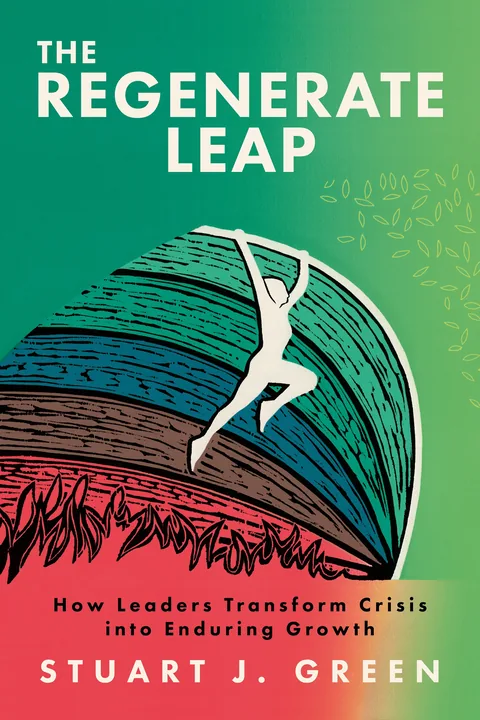
Leap forward. Grow through fire.
The Regenerate Leap is a business book for CEOs, founders, senior executives, and board members. Its subjects: crisis leadership, organisational change, business turnaround, and decision making under sustained pressure. Readers of Forged in Crisis, Undisrupted, and Conquering Chaos will recognise the territory.
Get the book
More about The Regenerate Leap→The firm, delivering
Blue-Green Advisors is the advisory practice that delivers the method. The Operating Assumptions Review is the first engagement. It produces a scored structural diagnosis and a phased redesign brief sequenced against the organisation's actual capacity. BGA operates under one principle: options, not decks.
Visit Blue-Green Advisors→"This book should be required reading for anyone in public service, diplomacy or humanitarian response."
What the evidence produces.
A structural diagnosis both parties can govern against. A phased redesign brief sequenced against the organisation's actual capacity. An advisory relationship grounded in three decades of field methodology and institutional experience.
What the engagement actually looks like.
The diagnostic is free. The discovery call is free. The engagement that may follow is quoted, scoped, and optional. This page names the shape of each step, the time commitment, and the confidentiality terms so the board chair can review them before any conversation begins.
Free. No email required to see results.
Thirteen questions. Five minutes. The results display on-screen immediately. No data is stored. No email capture gates the result. The forwarding function sends the governance summary to the address you enter, and nothing else.
Free. CEO and Board Chair together.
A forty-five minute call with Stuart. Both parties present. The call compares the CEO and Chair diagnostic readings and names the structural gap. No sales pitch. The purpose is to establish whether the Operating Assumptions Review is the right next step.
Quoted. Optional. Board-authorised.
A four to six week structural review delivered by Blue-Green Advisors. Scoped and quoted privately to the board chair after the discovery call, sized to the organisation. The deliverable is a redesign brief the board governs against. The OAR is commissioned as a governance investment, not a CEO discretionary spend.
Fiduciary-grade.
Diagnostic responses are not stored. Forwarded summaries contain structural fitness data only. No CEO performance data is shared in any forwarded document. The leadership reading is visible only to the respondent, never to the chair or the board. All engagement data is held under professional confidentiality. No third-party sharing.
Book a discovery call.
Thirty minutes. A private conversation with Stuart J. Green. No consultancy pitch.
Or take the Operating Model Fitness Index first. Five minutes. The instrument that produces the diagnosis the discovery call discusses.
Take the diagnostic